
Basement insulation in Windsor CA - warm walls that don't trap moisture
Cold floors or a damp, musty basement? We sort out the moisture first, then insulate the walls so the room holds its heat.
- Licensed and insured.
- Free quotes on site.
- We reply within 1 business day.
Is it worth insulating my basement walls in Windsor?
The short answer: Basement insulation in Windsor puts a layer of foam on the inside of your foundation walls, so the basement holds heat, the floors above stop feeling cold and noise between floors drops.
Most basement calls I get start with cold floors upstairs or a downstairs room that smells musty and never warms up. Bare concrete pulls heat out of the room and lets ground moisture through, so this job is part insulation and part moisture control. The price moves with how much wall there is, whether water has to be dealt with first and which foam suits your walls, and the schedule turns on that same moisture work plus a permit if your job needs one. I lay all of that out in a written estimate once I've seen the space.
How can you tell your basement needs insulation?
Cold floors upstairs
If the floors over your basement feel cold all winter even with the heat on, the room below is usually losing heat straight through bare concrete. Every month it stays that way, your furnace is partly heating the ground outside.
A musty smell downstairs
A musty smell, damp spots or a white chalky crust on the concrete mean water is working through the wall. That has to be found before anything covers it, and waiting gives mold more time to settle into stored boxes and framing.
Old batts hanging loose
Fiberglass batts tacked to a basement wall often sag, darken or smell after a few winters. That usually means moist air is getting behind them, and leaving them up keeps a wet layer pressed against the wall.
How we do basement insulation, step by step
I start where the water is. Moisture comes first, because insulation over a damp wall just hides the trouble, so I look at the concrete, the floor edges and the ground outside before we talk about anything else, and if water is coming in we plan that fix before any foam goes on. Then we talk about which material holds up best against your foundation, since concrete stays cool and a little damp all year and only some insulation copes with that. Federal building research says fuel-burning appliances like a gas furnace or water heater should be checked before and after a basement is sealed up, because a tighter room changes how they get their air, so if yours are down there that check belongs on the list for the job. Last, the walls get insulated, and the rim joist, the band of wood sitting on top of the foundation, gets air sealed so its gaps are closed before it's insulated too.
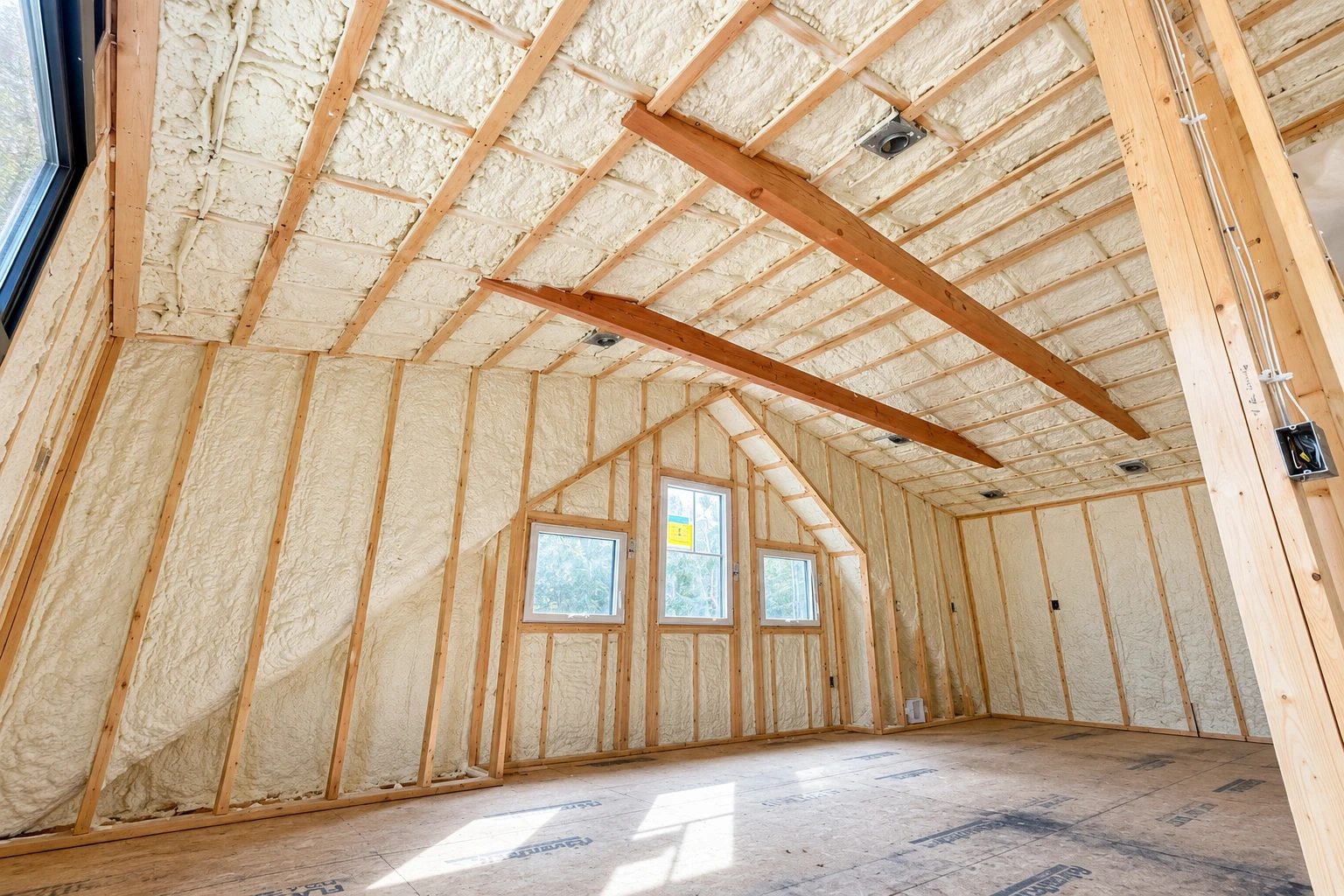
On bare concrete that usually means closed-cell foam insulation, the dense kind that slows moisture as well as heat. Open-cell foam insulation is lighter and softer and works well for sound, but the same federal research notes it has to go on thicker than closed-cell to block vapor, so ask any installer which type and what thickness they plan for your walls.
Closed-cell spray foam on concrete
This suits most bare basement walls, especially rough poured concrete or block, because the foam fills every dip and seam and bonds right to the wall. It costs more than panels, and on uneven walls I think that's money well spent.
Rigid foam panels
Panels fit flat, smooth walls in a basement you plan to frame and finish. They only control moisture when they're stuck to the wall with no air gap behind them and every edge and seam is sealed tight, so the install takes patience.
What happens when you call about basement insulation in Windsor?
Here's how a basement job goes with us, from your first call to the crew's last day. I like to see the walls myself before anyone talks numbers, so the visit always comes before the estimate.
- Step 01
Call or send a request
Call (707) 687-4455 or use the request form, and we'll get back to you to set a time for me to come out. It helps to mention any damp walls and whether your furnace or water heater sits in the basement.
- Step 02
Walk the basement with me
I look at the walls, the floor edges and the rim joist with you and explain what I find and what has to be fixed first. If something needs a closer look, I'll tell you that plainly instead of guessing.
- Step 03
Get your written estimate
You get a written estimate that lists the moisture work, the material and how the foam gets covered, so you can see what's driving the cost before anything starts. If the job needs a permit, we handle that side too.
- Step 04
Our crew insulates the walls
Our install crew does the work with a lead installer on site. Windsor allows construction from 7 a.m. to 7 p.m. on weekdays and 8 a.m. to 7 p.m. on Saturdays, with Sunday work only by the Building Official's express approval, so we schedule crew days inside those hours.
Basement insulation rules and conditions in Windsor
Whether a basement insulation job in Windsor needs a permit is the Town of Windsor Building Division's call, and it isn't something I'll guess at for your house. If yours needs one, we take care of the application and set up the inspections, and we'll talk it through at the estimate. The division enforces California's building code, known as Title 24, along with the town's own municipal code, and the state energy code sets some standards for a house's outer shell by climate zone, so what applies depends on where your house sits.
We're based in Windsor and work across Santa Rosa, Healdsburg and the other cities around it. Basements aren't in every house here, and the ones we see are often partial basements or lower rooms cut into a slope, where the wall against the hill stays damp longest after winter rain. We find the same thing on jobs in Santa Rosa and Healdsburg, so I check that uphill wall first and plan the moisture work around it.
Get a free on-site look at your basement walls
We reply within 1 business day to set up a free visit, and I come out, look at your basement with you and write up the estimate. It's obligation-free, so you can take the written estimate and decide on your own time.
Why Windsor homeowners call H&M Windsor Spray Foam Insulation
The owner writes your estimate
I come out myself, look at the basement with you and write the estimate, then our install crew does the work with a lead installer on site. You hear the plan from the person who made it, and there's someone on site to ask while the job is underway.
In business since 2017
We started in 2017 and have kept the business small on purpose, so I can still get to every estimate. I learned this work from manufacturer guides and building science books, and I'd rather explain your house than rush through it.
We're licensed and insured
H&M Windsor Spray Foam Insulation is licensed and insured. California's Contractors State License Board keeps a separate class for contractors who install insulation for heat or sound control.
On a basement, doing things in the right order is what saves you money, so dry walls come before any foam. Satisfaction guaranteed. Ask for your estimate and I'll come take a look.
Basement insulation questions from Windsor homeowners
Should I insulate my basement walls from the inside or the outside?
For most existing homes, insulate from the inside. Insulating the outside means digging around the whole foundation and tearing up the yard, so it's only practical when you're already doing major foundation work, waterproofing repairs or an addition. If one of those is on your list, bring it up at the estimate.
What is the best insulation for basement walls?
Closed-cell spray foam is usually the best choice for basement walls. Federal building research found it gives the best moisture control of the inside wall insulations and makes an excellent air barrier, and it says fiberglass batts and cellulose should stay out of contact with foundation walls. Spray foam also has to be covered with ignition-barrier paint or drywall, so ask whether a quote includes that covering.
How much does basement insulation cost in Windsor?
Basement insulation cost comes down to how much wall needs covering, what moisture work has to happen first and which foam goes on. The rim joist, the covering over spray foam and how much has to be moved to reach the walls add to it, and your written estimate lists each part so you can see where the money goes.
Does basement insulation need any maintenance?
No, once basement insulation is installed it needs no maintenance. What's worth watching is the water side, so if a new damp spot shows up after a heavy storm, let us know and we'll help figure out where it's coming from.
Who issues building permits in Windsor CA?
The Town of Windsor Building Division issues building permits, and it also reviews plans and inspects the work. It's the office that decides about your basement, and as covered above, we handle the permit side when a job needs one.
How do I know if my basement is too damp to insulate?
Damp-feeling walls, water stains or a musty smell mean the moisture needs fixing before you insulate. Federal guidance warns that insulation over an unhandled moisture problem can hide it, and in some cases trap water in the wall and make things worse. I check this first, and I'll tell you plainly if it needs a closer look.
Related insulation services for basement walls
Closed-cell foam insulation
Choose closed-cell foam when the wall is bare concrete or block, since it slows heat, air leaks and ground moisture in one dense layer.
Open-cell foam insulation
Open-cell foam makes sense in a finished basement's framed walls or the ceiling under your living room, where quieter floors matter more than blocking ground moisture.
Have your basement walls checked
Rainy weeks show exactly where water gets into a basement wall, so this is a good time to call (707) 687-4455 or send the request form.