
Home insulation in Windsor CA - an attic sealed first, then filled to the right depth
Hot rooms upstairs, cold floors or a power bill that keeps climbing? We find where the heat goes and fix it in order.
- Licensed and insured.
- Free quotes on site.
- We reply within 1 business day.
Does my Windsor house need more insulation?
The short answer: Home insulation in Windsor means adding or replacing the insulation in your attic, walls or crawl space so your house holds heat in winter, stays cooler upstairs in summer and lets in less outside noise. For most houses it's an attic job, done after the gaps are sealed.
Most calls I get start with a hot room over the garage, cold floors or an attic nobody has looked in since they bought the house. The price comes down to how big the attic is, how many inches are already up there, which material makes sense and whether old insulation has to come out or something has to be repaired first. The schedule turns on those same things, plus whether your job needs a permit and an inspection. You get your own figure on a written estimate after I've looked, and if the real trouble is under the floors, crawl space insulation might be the better place to start.
How can you tell your house is losing heat through the insulation?
Upstairs rooms run hot
If the bedrooms upstairs or the room over the garage stay hot long after sundown, the attic above is usually letting heat soak straight through the ceiling. Every summer you wait, the AC works harder and the power bill shows it.
Floors stay cold all winter
Cold floors on a raised house usually mean the crawl space underneath has little insulation, or what's there has fallen off the joists. Until that's fixed, you're paying to heat air that leaks out through the floor.
Old insulation looks wet or dirty
Insulation that's matted, stained, damp or full of droppings has stopped doing its job, and it often points to a leak, a vent problem or pests. Burying it under new material only hides the problem, so it costs more the longer it sits.
How we handle home insulation, start to finish
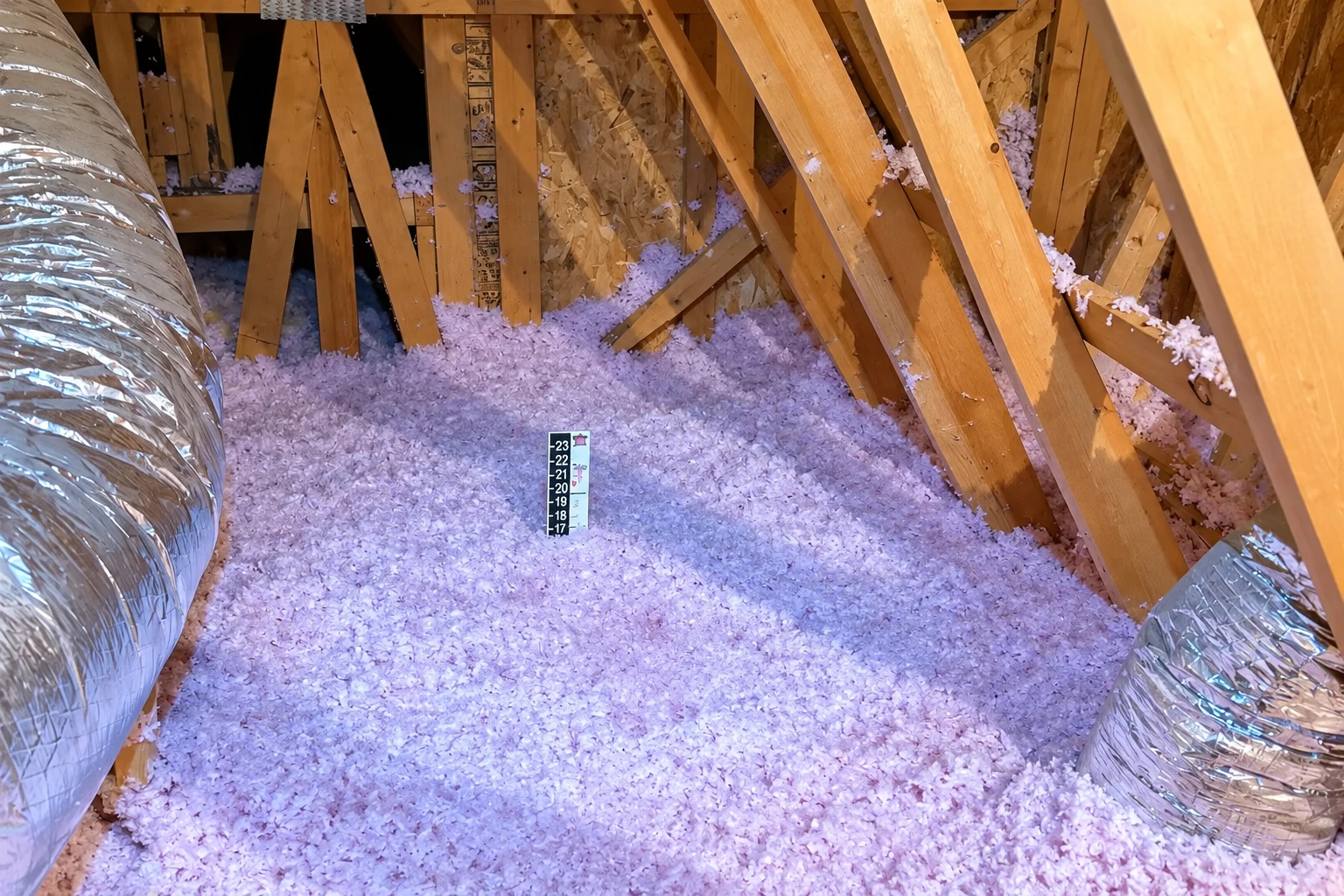
This is where most people start, and I'll show you in your own attic whether adding more is worth it. If it's not, I'll tell you. We start by checking how many inches are already up there and looking for anything that has to be fixed first, like wet insulation, moldy or rotted framing, a bath fan blowing damp air into the attic or too little ventilation, because new insulation over those just traps the problem. In houses built before 1930 I also look for knob and tube wiring, since it can be a fire hazard when insulation touches it and may need repairs first. Once the attic is ready, our crew does the air sealing, closing the gaps around pipes, wires, the hatch and the light fixtures, so the new insulation isn't fighting a draft. Then we add insulation evenly, full depth out to the edges where it's usually thinnest, and keep the eave vents clear so the attic can still breathe.
Sometimes the right first step is taking the old material out. If it's soaked, moldy or full of droppings, insulation removal clears the attic so we're starting clean instead of piling on. And when the complaint is cold floors rather than hot ceilings, the fix is usually below the house, so crawl space insulation may matter more than anything we do in the attic.
Air sealing plus blown-in fill
For most attics, sealing the gaps and topping up with blown-in insulation, loose fill blown through a hose, gives you the most for the money. It settles in evenly around joists and wires, which is why it's where I usually point people.
Spray foam when ducts are up there
Spray foam costs more, but it seals air while it insulates, all in one pass. It earns that price when your ductwork runs through the attic, because foaming the roofline brings those ducts inside the insulated part of the house, and closed-cell foam, a dense foam that blocks moisture, also suits damp spots.
What happens when you call about insulation in Windsor?
Here's how a home insulation job runs with us, from the first call to the finished attic, so you know who you'll talk to and what you'll have in hand before you decide anything.
- Step 01
Call or send a request
Call (707) 687-4455 or use the form, and we'll find a time for me to come out. Pick a time when you can be home, because I'd like you up at the hatch with me.
- Step 02
Walk the attic together
I look at the attic and crawl space with you, show you how much insulation is there and explain what has to be fixed first. Then you get a written estimate that lays out the work in the order it should happen and what it costs, so you can decide with the whole picture in front of you.
- Step 03
Our crew does the work
When a job needs a permit, that side is already handled before the crew shows up. In Windsor we book crew days within the city's construction hours, 7 a.m. to 7 p.m. on weekdays and 8 a.m. to 7 p.m. on Saturday, since Sunday work needs the Building Official's express approval.
- Step 04
Walk through the finished job
When the work is done, we clean up and show you the attic, so you can see the even depth and the clear eave vents for yourself. If the job had a permit, the inspection follows.
Home insulation permits and houses in Windsor
Whether your insulation job needs a permit isn't something I'll guess at, and the office that decides is the Town of Windsor Building Division, which handles plan review, permits and inspections for buildings in the city. If your job needs one, we take care of the application and set up the inspections, and we'll talk it through with you at the estimate. Windsor inspections happen Monday through Thursday, so we plan the finish of the work around those days. Behind those inspections sits the state building code, and its Energy Code sets efficiency requirements for changes to existing houses, not just new ones.
Most attics we open around Windsor belong to houses that have been lived in a good while, with insulation packed down thin, a room over the garage that bakes in summer or floors that never warm up. We're based in Windsor and see the same houses on jobs in Santa Rosa and Healdsburg, and the order stays the same. Fix what's wrong, seal, then insulate.
Find out if your attic needs more insulation
We reply within one business day to set up a free on-site estimate, and it's obligation-free. It helps if you mention your home's age, what you've seen in the attic and any gas appliances, so I know what to look for when I come out.
Why Windsor homeowners call H&M Windsor Spray Foam Insulation
The owner walks your attic first
I come out myself to look at the house and write the estimate, then our install crew does the work with a lead installer on site. That means the plan you heard in your attic is the plan the crew follows, on days booked within Windsor's construction hours.
Licensed and insured for this work
We're licensed and insured. California has a C-2 Insulation and Acoustical classification for contractors who do this kind of work, so it's fair to ask anyone you're comparing how they're licensed.
Small on purpose since 2017
We've been in business since 2017 and kept it small on purpose, because a job done in the wrong order wastes your money and I'd rather take the time to explain it. Our work is satisfaction guaranteed.
On this job the order matters more than the material, so problems get fixed and gaps get sealed before any insulation goes in. Call (707) 687-4455 or send us a request, and I'll come take a look.
Home insulation questions from Windsor homeowners
How do I tell if my attic in Windsor needs more insulation?
If the insulation sits level with or below the attic floor joists, so you can easily see them, you should add more. If the joists are buried well beneath it, you probably have enough, and adding more may not be worth the cost. I'll check the depth with you at the estimate, along with anything that has to be fixed first.
What does attic insulation cost around Santa Rosa?
Attic insulation in the Santa Rosa area usually costs about $1,700 to $5,600 per job, which is what the work runs across the area, not our price. Where your house lands depends on the attic's size, what's already up there and whether anything has to come out or be repaired first. Your own figure comes on the written estimate after I've seen the attic.
What is the best order for air sealing and insulating an attic?
Seal first, then insulate. The usual guidance is to finish the attic air sealing before the insulation project, so if you're planning both, the sealing is step one. If you have oil or gas appliances, you can consider having them tested before and after sealing, because in some cases a tighter house can push combustion gases back inside.
What should I do if my attic has old vermiculite insulation?
The EPA recommends leaving vermiculite, the pebbly gray-brown loose fill in some older attics, undisturbed, because disturbing it can release asbestos fibers into the air. If you choose to have it removed, the EPA says a trained and accredited asbestos abatement contractor, separate from the company that assessed it, should do the work.
Can insulation touch recessed can lights?
Only if the lights are rated IC, for Insulated Ceiling. Otherwise ENERGY STAR's guide keeps insulation at least 3 inches back from can lights, and off soffit vents too. If you're not sure what you have, ask, and I'll check the rating while I'm up there.
How long do we have to stay out of the house after insulation goes in?
With blown-in loose fill, you usually don't have to leave at all. With spray foam, you, the kids and the pets stay out until the re-entry time, the wait before it's safe to come back in, that the foam maker sets. I'll tell you that time at the estimate so you can plan around it.
Related insulation work for Windsor homes
Insulation removal
If animals have nested or a roof leak has flattened the old batts, clearing them out gives your new insulation a clean, dry floor to sit on.
Crawl space insulation
Cold floors and drafts coming up through the hallway usually start beneath the house, where insulation between the floor joists keeps the heat in the rooms you use.
Get your attic checked before adding more
Our phone hours run into the evening every day, so call (707) 687-4455 after work or send the form tonight.