
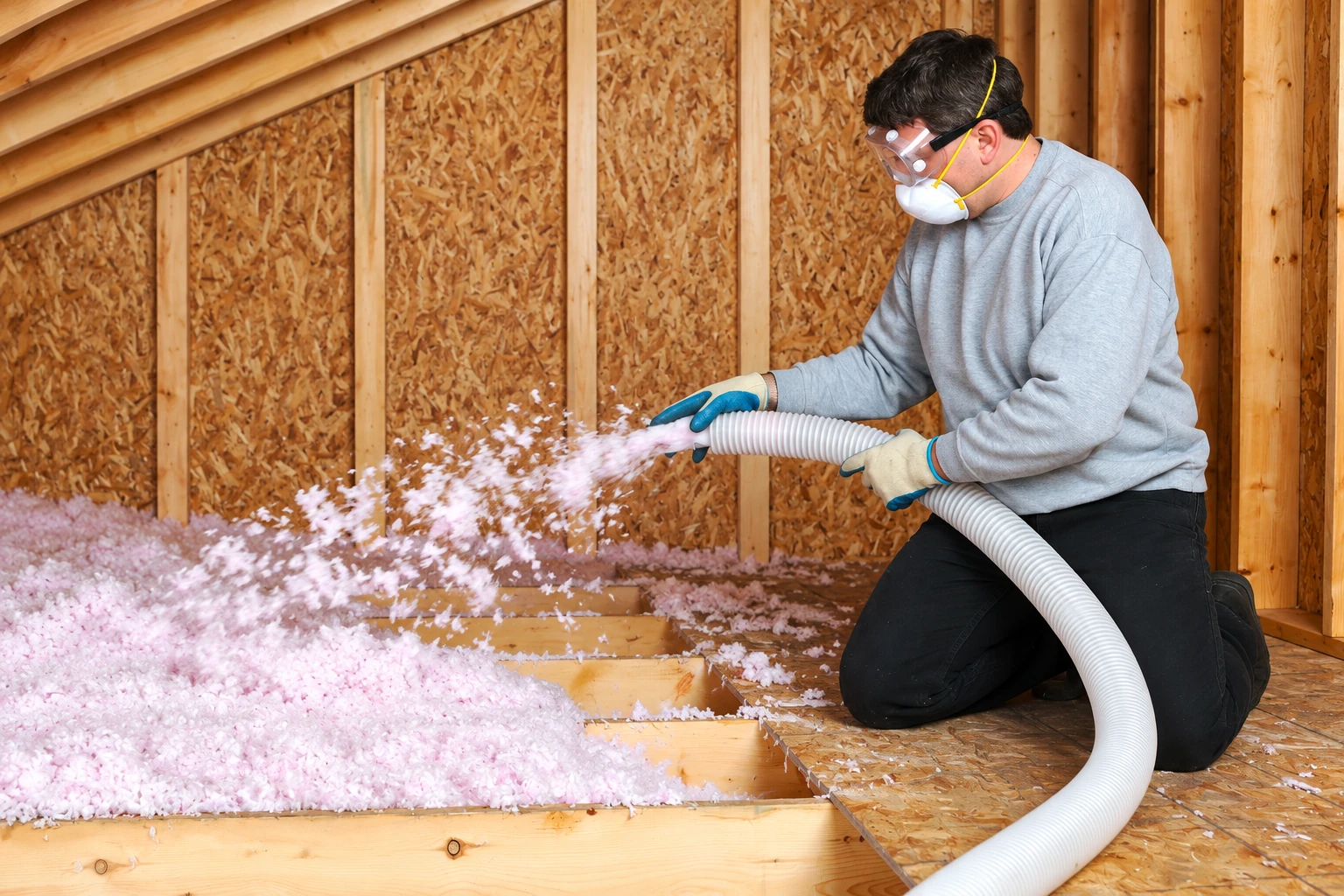
Blown-in insulation in Windsor CA - even coverage with eave vents left clear
Hot rooms upstairs or cold floors usually mean a thin attic. We blow loose fill evenly across it so the whole house stays comfortable.
- Licensed and insured.
- Free quotes on site.
- We reply within 1 business day.
Is blown-in insulation the right fix for your Windsor attic?
The short answer: Blown-in insulation is loose fill blown through a hose, either across your attic floor or into closed wall cavities, where it settles into the corners and around the framing that batts tend to leave gaps in. For Windsor homes it's usually the most direct way to fix a thin attic or empty walls, so hot rooms upstairs and cold floors even out.
Most people call me about a room over the garage that bakes all summer, cold floors, or an attic they've never looked in, and my first question is how many inches are already up there and what shape they're in. That answer drives the price more than anything, along with the size of the attic, how many gaps around pipes, lights and the hatch need sealing, and whether old material has to come out first. The schedule turns on that same prep and on whether your job needs a permit. If your attic needs more than a top-up, our attic insulation page covers the bigger version of the job, and the written estimate after my visit puts your own figure on paper.
How do you know your house needs blown-in insulation?
Hot rooms upstairs
If the bedrooms upstairs or the room over the garage stay hot long after sundown, attic heat is soaking straight down through thin insulation. Left alone, the AC keeps running to catch up, and the power bill shows it every summer.
Cold floors and drafts
Cold floors and a draft you can feel near outlets or baseboards usually mean warm air is escaping up through gaps in the attic and pulling cold air in down low. Insulation alone won't stop that, so the longer it goes, the more you pay to heat air that leaves.
You can see the joists
Pop the hatch with a flashlight, and if the tops of the ceiling joists are showing or the fill is deep in the middle and thin near the eaves, you're short where it counts. Old fill only settles further over the years, so that gap keeps growing.
Stained or matted fill
Dark streaks, damp clumps or droppings in the old insulation mean it has stopped doing its job and may be hiding a leak or pests. Blowing new fill on top just buries the problem, so this is the sign to deal with before the next rainy season.
How we install blown-in insulation
On an attic job I start by looking at what's already up there, because anything soaked or full of droppings comes out before new fill goes in. Our crew then seals the gaps around pipes, wires, can lights and the hatch, since warm air pushing through those holes slips right past any depth of insulation. We hold the fill back from flues and exhaust fans, set baffles, stiff chutes that keep the fill off the eave vents, so the attic can still breathe, and then spread the loose fill evenly across the whole attic floor, all the way out to the edges where thin spots usually hide. In finished walls we fill each cavity through small holes instead of tearing out drywall, then plug and patch them, and we clean up before we leave.
Blown-in fill is often one piece of a bigger plan. If the old insulation is wet, matted or full of droppings, we start with insulation removal so the new layer goes onto a clean attic floor. And if your cold floors and drafty rooms point to more than the attic, our home insulation work looks at the walls and crawl space together, so you fix things in the right order instead of chasing one room at a time.
Topping up the attic
This suits an attic whose insulation is dry and clean but has gotten thin, because we seal the gaps and blow fresh fill over what's there. It's usually the least disruptive and least costly way to finish a thin attic.
Clearing out and starting over
When the old fill is soaked, matted or full of droppings, we pull it, seal the bare attic floor and blow in new. It costs more than a top-up, but it's the only way the problem doesn't stay up there with you.
Filling finished walls
For older houses with empty exterior walls, we fill the cavities through small holes so you keep your drywall and paint. It's worth asking about when rooms stay cold even after the attic is done.
Foam when ducts are upstairs
Spray foam costs more but seals air while it insulates, so it can be the better call when your ductwork runs through the attic. Without ducts up there, sealing the gaps and topping up with loose fill usually gives you more for the money, and that's what I'll recommend.
What happens when you call about blown-in insulation in Windsor?
Here's how a blown-in job goes with us, from your first call to the last of the fill going down, and who you'll be dealing with at each step along the way.
- Step 01
Call or send a request
Call (707) 687-4455 or use the form on this page, and we'll set a time for me to come out to the house. Our phones are answered seven days a week, so reach out whenever it suits you.
- Step 02
Walk the attic with me
I come out, look through the attic and any walls you're worried about with you, and explain what I find and what has to be fixed first. You then get a written estimate that lays out the work in order with its price, so you know what you're paying for before anything starts.
- Step 03
Book inside Windsor's work hours
Windsor allows construction from 7 a.m. to 7 p.m. on weekdays and 8 a.m. to 7 p.m. on Saturday, and Sunday work needs the Building Official's express approval. We book your job inside those hours so nothing holds it up.
- Step 04
Our crew does the work
Our install crew does the job with a lead installer on site you can ask anything, and they cover the path to the hatch before any fill comes through the house. When they're finished, they clean up and show you the attic.
Blown-in insulation in Windsor: what changes the job here
Most houses lose as much as half their heated or cooled air, and thin insulation and leaky attics are a big part of why, which is why I start every Windsor visit in the attic. What I usually find around here is older fill that has settled to a few inches, a deep pile under the hatch and bare spots out by the eaves where nobody could reach. Hot rooms in summer and cold floors in winter both trace back to that thin, uneven layer. We see the same attics on jobs in Santa Rosa and Healdsburg, and from our base in Windsor we work across Petaluma and the other cities around it too.
Building permits here come from the Town of Windsor Building Division, which handles plan review, permits and inspections, and whether your job needs one is their call. The state's newest energy standards took effect at the start of 2026, so the division is the place to check which rules apply to your project. If your job does need a permit, we take care of the application and set up the inspections, and we'll talk it through at the estimate.
Get a free on-site estimate for blown-in insulation
We reply within one business day to set up a free on-site estimate, and it's obligation-free. I come out, walk the attic with you and explain what I find, and then you get the estimate in writing.
Why Windsor homeowners call H&M Windsor Spray Foam Insulation
The owner explains it first
I come out myself to look at the job and write the estimate, and I'll show you what's going on in your attic before I suggest anything. Then our install crew does the work with a lead installer on site, so the plan you agreed to is the one that gets done.
In business since 2017
We started in 2017 and have stayed small on purpose, so the person who quoted your attic is still the one you call with questions. That matters on this work, because a job done in the wrong order is where people waste money.
Licensed and insured in California
We're licensed and insured. The state licensing board treats installing insulation as its own specialty, so it's fair to ask anyone who quotes your attic for their license.
On a blown-in job, the order matters as much as the depth, so the gaps get sealed and the vents stay open before any fill goes down. Request your estimate or call (707) 687-4455, and I'll come take a look.
Blown-in insulation questions from Windsor homeowners
Is blown-in insulation cheaper than batts?
Usually, yes. An older federal fact sheet found that blowing loose fill, whether fiberglass, rock wool or cellulose, usually costs less than installing batts and covers better, though costs vary. In most attics that means fuller coverage around framing and wires for less money, and I'll tell you at the estimate if yours is the exception.
How much does insulation cost in the Santa Rosa area?
An insulation job of any kind around Santa Rosa usually runs about $1,600 to $5,700, and that range covers all insulation work, not just blown-in attics. Where yours lands depends on the size of the attic, how much sealing it needs and whether old material has to come out first. The written estimate after my visit gives you the figure for your house.
What is the best way to insulate finished walls without opening them up?
Drill and fill is the usual way, with small holes near the top of each wall cavity and blown-in insulation filling the space behind them. The holes can go on the inside or the outside of the wall, so we pick the side that's easier to patch on your house.
Can you blow insulation into an older house in Windsor?
Yes, but the age of the house changes the job. In homes built before 1980, wall work can bring lead safety rules into play depending on how much wall gets disturbed, and knob-and-tube wiring, the old wiring strung on porcelain knobs, can't have insulation applied to or around it under the electrical code. That's why I ask when your house was built and check the wiring before we plan anything.
What causes moisture problems after blowing in attic insulation?
Buried eave vents are the usual cause, because air moving through the attic is what carries moisture out. California's energy guidance says to keep those vents clear, since moisture left behind can condense under the roof deck, damage the structure and make the insulation work less well.
Do I have to leave the house while you blow in insulation?
Usually not for an attic job, since loose fill doesn't need a re-entry time, the wait before you can come back in, the way spray foam does. When walls are blown from inside, federal installer guidance calls for protecting the floor below and closing off the work area to hold the dust in, so our crew sets that up before the first hole goes in.
Related insulation work for your Windsor home
Home insulation
If the attic is only part of the problem, a look at walls, floors and the crawl space together shows where the rest of your heat is going.
Insulation removal
When the old fill up there is wet, matted or full of droppings, pulling it out first keeps the new insulation from inheriting the same problem.
Book your blown-in insulation estimate today
Call (707) 687-4455 or send the form, and have the year your house was built and whether your recessed lights are rated to be covered by insulation, since only those can be buried in fill.